This Week in Love is a series of blog posts where Sachi and I share what we love. Browse the archives and follow @weekinlove on Twitter.
This Week in Love: AeroPress Coffee Maker
Remember those orange flying rings called Aerobies? They were a little like a Frisbee, but would fly (almost) forever. In fact, an Aerobie was used to break the Guiness World Record twice for "longest throw of an object without any velocity-aiding feature."
The inventor of the Aerobie flying ring was an Alan Adler from Palo Alto, CA. While I loved my Aerobie as a kid, Mr. Adler invented something that gives both of us great joy as adults: the AeroPress Coffee Maker. Like the flying disc, it's engineered to get results.
Why We Love It
We both love a dark, rich cup of coffee and drink our share of espresso. We've never owned an espresso machine and have always looked for ways to get the espresso experience at home. Drip coffee or Keurig coffee makers just don't get to that level of flavor. Plus, espresso machines can be expensive. The Aeropress is the closest we've come to espresso at home for a fraction of the cost - about $26 on Amazon. (affiliate link)
Here's how it works...
The Aeropress makes one cup of coffee at a time and involves a bit of a process. For me, it's a daily ritual I enjoy. People who drink tea know what I mean. The basic idea is that you fill a tube with coffee and hot water and then manually press it through a filter into a cup. A really simple idea that works.
The Basic Parts
The paper filter goes in the black plastic filter, which attaches to the bottom of the bigger tube.
Fill it with coffee and hot water, insert the plunger and press the coffee into the cup.
The resulting coffee is richer and smoother than we thought was possible at home. Plus, it takes about 10 seconds to clean and is made from durable materials. All for under 30 dollars (US).
Quick note on our policy regarding products. As always, This Week in Love is not a paid advertisement. We have no connection with AeroPress aside from loving the product. However, some products we cover may be for sale on websites like Amazon and we may use affiliate links. This means that if you click an Amazon link from this page (for instance), Amazon will know it came from our website and give us a small slice of the purchase price. We'll let you know when this is the case, like this:
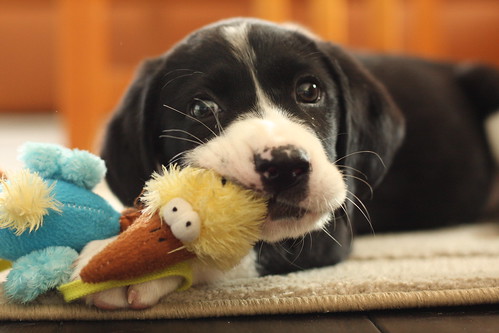
A few months back, I introduced you to Bosco, our new puppy. He's not much help when it comes to making videos, but other than that, he's been an awesome addition to the Common Craft family. We call him the "mini-beast".
Like almost everything in my life, I've taken a LOT of photos of that dog. This post is really just a quick look at how he's grown since you saw him last. Here's a complete set of photos on Flickr.
Here's the photo you saw when he was just weeks old. Our friend Tony Wright said recently the Bosco looked like a sad puppy in this picture. We didn't know it at the time, but he was sick and quite sad.
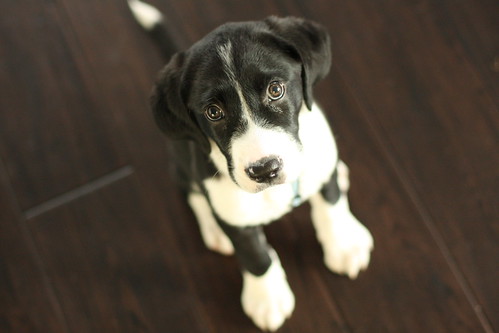
But made a full recovery - and his nose started to get a little blacker.
And grew...
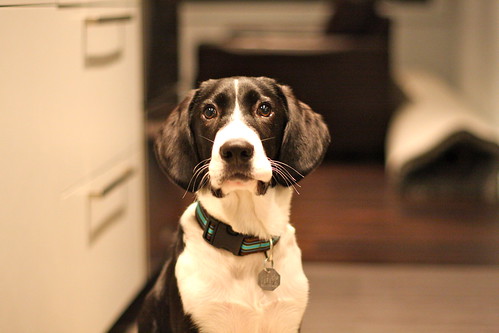
and grew... and got a totally black nose.
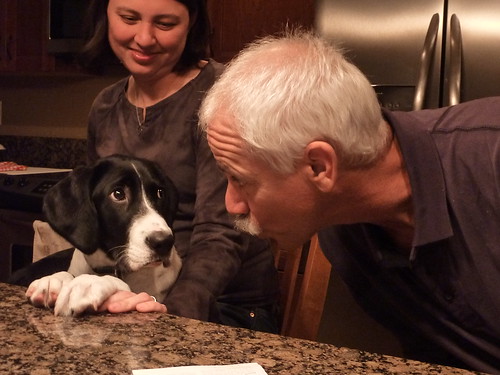
And started to have intelligent discussions with my brother.
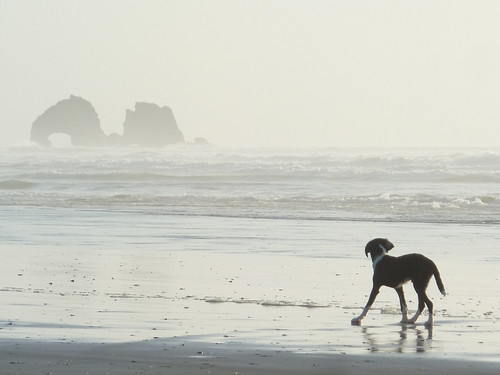
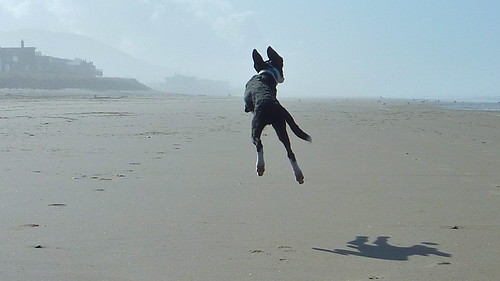
And really, really enjoy the beach.
Notice the shadow of the ball on the sand - it's just in front of his mouth.
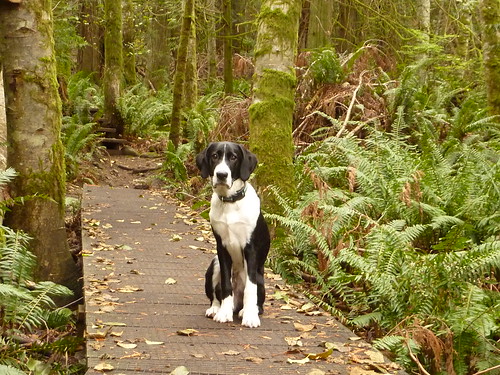
This is the mini-beast just days ago. He's almost 6 months and weighs about 40 lbs.
You can follow Bosco on Twitter. He's a low-frequency twitterer.
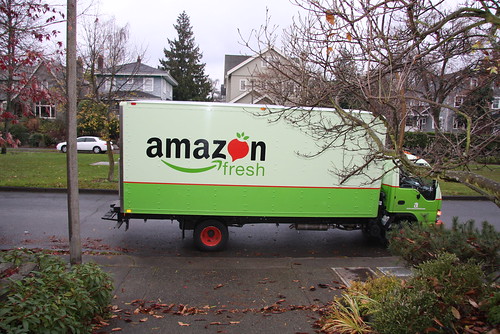
Living in Seattle, a test-market for Amazon Fresh, we signed up and never looked back. Ordering groceries online and having them delivered within hours makes going to the grocery store seem like such a pain. With Amazon Fresh, Amazon proved to us they could replace the grocery store experience with home delivered goodness.
Just today, Sachi noticed something new and very interesting on the Amazon Fresh website - a new tab appeared pointing us to "Amazon Now."
On the same page is a small graphic that sums up the idea:
Amazon Now means that you can have the charming Amazon Fresh trucks deliver a Canon HD video camera and a bicycle seat along with your normal milk and eggs. No UPS, no FedEx - just an Amazon supply system that delivers electronics, books, toys, kitchen supplies, etc. along with your groceries.
We thought Amazon Fresh was amazing, but the idea of everything else arriving in those reusable boxes has my mind sufficiently blown. Once you get used to the idea that you don't have to go to the grocery store anymore, making the jump to other shopping experiences is an easy one.
By including non-grocery products of all sorts to Amazon Fresh customers, the company is testing a new system to deliver warehouses of products to the doorsteps of urban dwellers. Amazon Fresh is currently delivering to limited parts of Seattle, but I imagine the service will be expanded soon if it works here. We don't want to see another WebVan or Kozmo.
Read the Amazon Fresh FAQ for more info. I will report back soon on the Amazon Now experience.
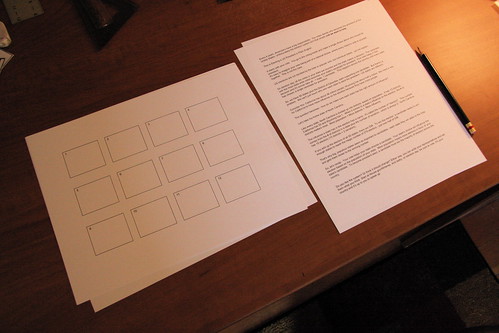
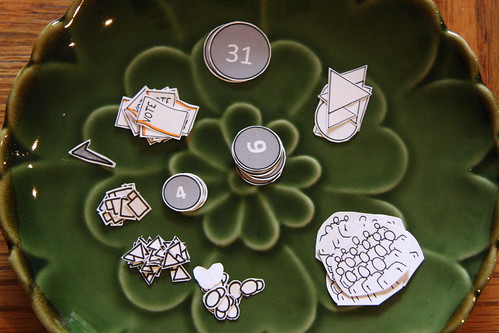
People often ask for a look at how we make the videos. When we were putting together the the "Electing a US President" video, I made a special point to take photos of the process. Here's how it works:
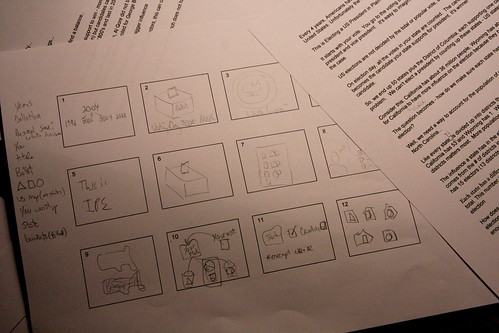
Every video starts with a script. If there is "secret sauce" it happens in writing the script because the script drives the video. We use Google Docs to collaborate until we feel like the script is close to finished. Then, we start looking at a thumbnail storyboard.
I draw the scenes for the thumbnail storyboard. It's our first attempt to represent the visuals.
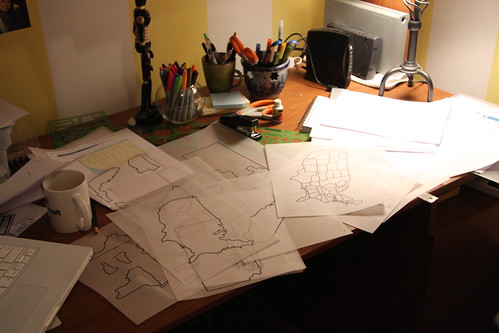
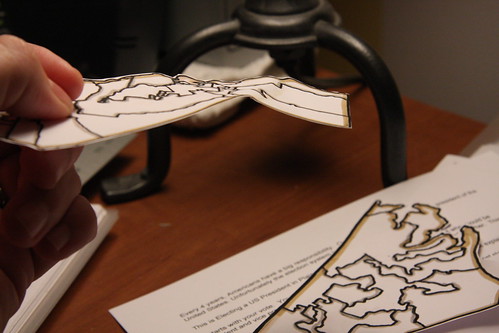
After a couple of rounds of thumbnails and lots of talking between us, we make a list of all the elements that need to be drawn for the video. At this point, I start drawing and digitizing the images. Of course, with the maps in this video, I resorted to tracing.
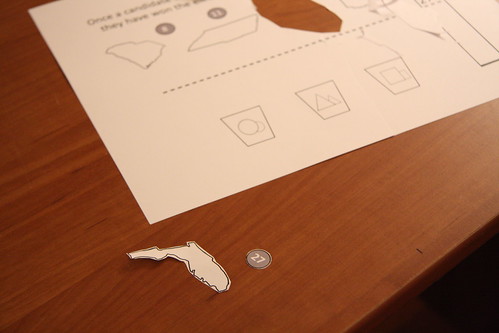
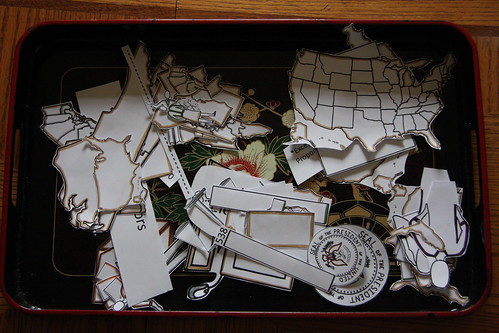
Once the images are drawn and digitized, we set up a new storyboard using purely digital images. This way, we can manipulate sizes easily and see how everything fits together. Once we feel confident, we print out the materials and start cutting and coloring.
Sometimes, we leave things laying around and our dog decides to put them in his mouth.
Before shooting the video, we assemble all the materials and take them to the studio. We iterate at every point in the process. The script and visuals change every day.
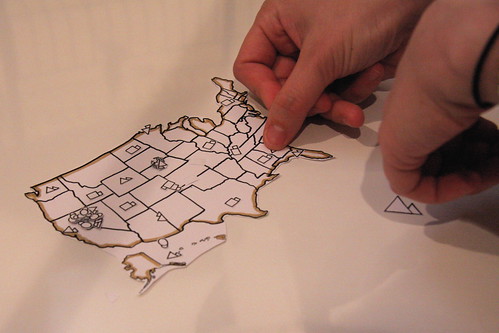
Once production begins, we follow the storyboard and slowly lay out each scene. Often, scenes are revised on the fly. You can never really see how it will work until you see it on the screen.
Each video is different. Sometimes we go down a road, only to find a dead end. We are both prepared to throw away our work and start over if it doesn't feel right. It's painful, but necessary.
Sachi takes over control once we get to the studio. She runs each scene, the camera, lights, etc. She manages the voice-over and all the post production work. Editing is a huge part of what makes the videos work and those decisions are Sachi's. While she's doing that, I start this process over for the next video.
All these elements come together to create this video (on Vimeo, YouTube and dotSUB):
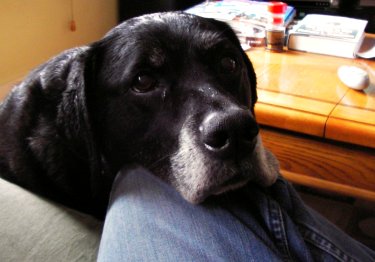
He's 13, his breath smells really bad, he's deaf, he walks like a retired football player, begs with renewed vigor and is increasingly obstinate.
Indeed, the old dog experience is so different than the young dog experience. He's still the same sweet dog, but with new quirks that keep things new, even in old age. He is not the Frisbee catching dog of yesteryear. He is more like Jabba the Hut. A deaf Jabba the Hut with with a better disposition.
His deafness is sad and amusing at the same time. When he was younger - he would greet us at the door. A good guard dog, it was impossible to sneak up on him. These days he doesn't hear us come home. Often, we have to walk all the way to his bed and wake him up to say "we're home!" You can't help but think his inner dog voice is saying "Ooops. That's not supposed to happen."
There are also the times when we arrive to hear him howling this terribly lonesome howl. It sounds so sad. "Poor meeeeee", "All aloooone". Once we come into the room he gets so excited. We muse that, in his mind, he thinks "It worked! The howling worked! Again!"
Speaking of howling - we love to convince him to howl on command. You'd laugh at us - we both throw our heads back in a chorus of human howling to set the example for him. It works. What we discovered last night is that the actual howling is now optional. All we have to do is throw our heads back and he gets it. Dog sign language is now his best way of listening to us.
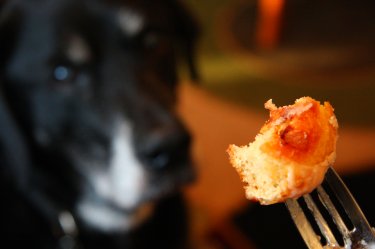
He commands a little more of us too. As Sachi would tell you, when she met him 8 years ago, he didn't beg at all. These days, he's a professional beggar and it's impossible to say no to an old dog. (Side note: don't you think it's interesting that he's begun begging since meeting Sachi? Hmmm.) Anyway, he'll now go so far as to bark at us to say "I want your FOOD!" We don't look kindly upon this, but it's hard to say no. I dole out leftovers to him in bits, just to spend some quality time interacting.
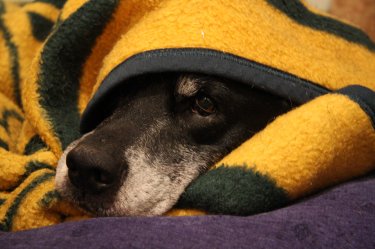
But don't feel sorry for this dog. Working from home means we're with him all the time and we know he's sore with arthritis. Sachi makes sure that he's never cold and keeps him covered with a blanket. Of course, he now expects the blanket and will wait by the bed for it. Can you believe that? He expects a blanket over him? Anything for Amos.
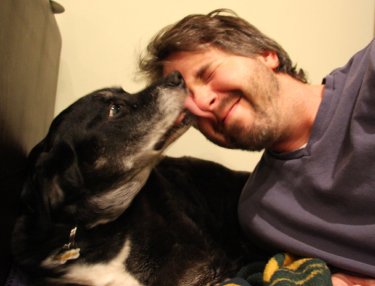
We've talked about saving some DNA in case cloning was possible in the future - I would take another Amos in a second. I think everyone should have one, young and old. We know our time with him is growing shorter by the day and do everything we can to make his old age comfortable for us both, even if that means old dog breath in your face while watching a movie on the couch. Somehow, it's really, really nice.
2008 is shaping up to be a interesting year to try out new things when it comes to digital photos. From photo transfer technology, to wall hanging, to photo sharing services, here are a few things I'll be using in 2008.
Eye-Fi
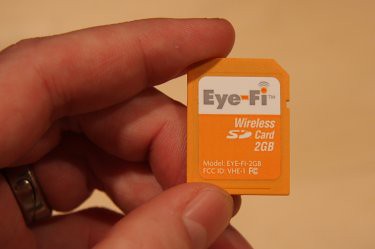
I consider Eye-Fi a magical piece of photo technology. It makes it possible for me to upload photos to Flickr (or other services) and to my computer directly from my camera using my wi-fi network - no wires, no card readers. Once it's installed, you just shoot a photo and within seconds the photo magically appears on the web and my computer.
Update: I use Eye-fi on my home wi-fi network - when I arrive home, the camera starts uploading as long as the camera is on. I set it to upload to Flickr as "private" and then change permissions as needed.
For SD memory cameras, you just replace your SD card with the 2gb Eye-Fi SD card and load the software on your computer. Once it's set up, the Eye-Fi SD card makes it possible to transfer photos automatically. If you don't have an SD camera, you can use the Eye-Fi card with a Compact Flash adapter too. I first heard about Eye-Fi from Anastasia of Juxtaprose and this year, it was a Christmas gift from my Mom. Thanks Santa!
FotoflÅ??t
Last year I gave Flickr's photo printing service a try and was impressed. I get so used to seeing photos online that I forget about how they look on a wall. Just recently I came across fotoflÅ??t - which takes photos and wall mounting to a new level.
Two things I love about fotoflÅ??t:
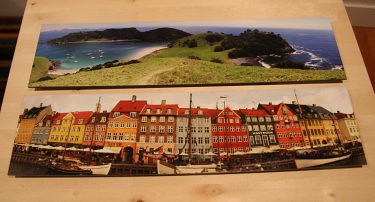
1. Frameless design and photo protection. They print your photos on high quality photographic paper and then fuse it to 1/8" thick acrylic. This makes them low reflection, low glare and high durability. I printed some of our travel panoramas.
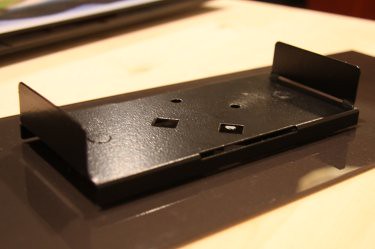
2. Magnetic wall mounts. Each fotoflÅ??t comes with a wall mount that makes the photos modular. Once the mounts are in place, you can have a number of fotoflÅ??t photos and switch them out in seconds.
Right now, fotoflÅ??t is working directly with Smug Mug, a photo sharing service. In fact, in order to use fotoflÅ??t I had to upload my photos to Smug Mug first. This may change soon.
SmugMug
Either way, it gave me a reason to try out SmugMug and I'm impressed so far. SmugMug is a bit more professionally oriented (and expensive) than Flickr, and I'm not a pro, but here are a few things I dig about SmugMug. Photos really do look good on SmugMug. Maybe it's the black background or pixie dust, but I love how my photos look there. Nice options. I like the new Picnik integration on Flickr better, but SmugMug provides a few options for online photo editing. If you become a power user (59.95/yr), you can even upload videos to your account.
Build a store. If you become a Pro user (149.95/yr) you can make SmugMug a platform on your domain. This means that I could use SmugMug to create LeesPhotoStore.com and sell my photos. They keep 15% and handle support and technical details.
The SmugMug attitude. I love their story of passion, family, being small and living a dream.
So these are a few products I plan to use this year. Maybe you have more?