all posts tagged “flickr”
2008 is shaping up to be a interesting year to try out new things when it comes to digital photos. From photo transfer technology, to wall hanging, to photo sharing services, here are a few things I'll be using in 2008.
Eye-Fi
I consider Eye-Fi a magical piece of photo technology. It makes it possible for me to upload photos to Flickr (or other services) and to my computer directly from my camera using my wi-fi network - no wires, no card readers. Once it's installed, you just shoot a photo and within seconds the photo magically appears on the web and my computer.
Update: I use Eye-fi on my home wi-fi network - when I arrive home, the camera starts uploading as long as the camera is on. I set it to upload to Flickr as "private" and then change permissions as needed.
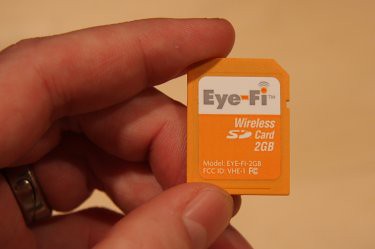
For SD memory cameras, you just replace your SD card with the 2gb Eye-Fi SD card and load the software on your computer. Once it's set up, the Eye-Fi SD card makes it possible to transfer photos automatically. If you don't have an SD camera, you can use the Eye-Fi card with a Compact Flash adapter too. I first heard about Eye-Fi from Anastasia of Juxtaprose and this year, it was a Christmas gift from my Mom. Thanks Santa!
FotoflÅ??t
Last year I gave Flickr's photo printing service a try and was impressed. I get so used to seeing photos online that I forget about how they look on a wall. Just recently I came across fotoflÅ??t - which takes photos and wall mounting to a new level.
Two things I love about fotoflÅ??t:
1. Frameless design and photo protection. They print your photos on high quality photographic paper and then fuse it to 1/8" thick acrylic. This makes them low reflection, low glare and high durability. I printed some of our travel panoramas.
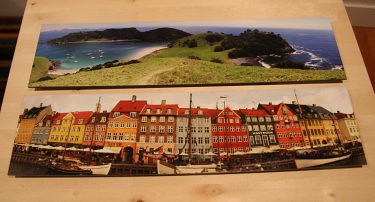
2. Magnetic wall mounts. Each fotoflÅ??t comes with a wall mount that makes the photos modular. Once the mounts are in place, you can have a number of fotoflÅ??t photos and switch them out in seconds.

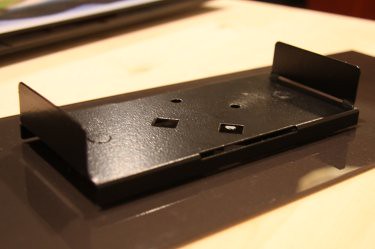
Right now, fotoflÅ??t is working directly with Smug Mug, a photo sharing service. In fact, in order to use fotoflÅ??t I had to upload my photos to Smug Mug first. This may change soon.
SmugMug
Either way, it gave me a reason to try out SmugMug and I'm impressed so far. SmugMug is a bit more professionally oriented (and expensive) than Flickr, and I'm not a pro, but here are a few things I dig about SmugMug.
Photos really do look good on SmugMug. Maybe it's the black background or pixie dust, but I love how my photos look there.
Nice options. I like the new Picnik integration on Flickr better, but SmugMug provides a few options for online photo editing. If you become a power user (59.95/yr), you can even upload videos to your account.
Build a store. If you become a Pro user (149.95/yr) you can make SmugMug a platform on your domain. This means that I could use SmugMug to create LeesPhotoStore.com and sell my photos. They keep 15% and handle support and technical details.
The SmugMug attitude. I love their story of passion, family, being small and living a dream.
So these are a few products I plan to use this year. Maybe you have more?
Wow, interesting things from community people are just rolling off the presses lately. Derek Powazek is leaving JPG Magazine and 8020 Publishing (the companies he founded) - due to a disagreement with the partners. It's so sad to see someone work so hard and be so passionate about a community project only to see it controlled by someone else. His passion made it successful, just like Matt Haughey at MetaFilter.
JPG Magazine is one of the community-based businesses that I cite most. It's a real-world photography magazine that is made of contributions from the community. The community creates the photos and votes for them to appear in the magazine. A well crafted community mobilization strategy if there ever was one.
Derek's explanation of the situation is a case study in how partnerships can go wrong - and serves as his way of saying goodbye to the community he developed over three years. If you're an entrepenuer, go read it now.
If it’s any help to other entrepreneurs, here’s what I’ve learned.
- Make no assumptions when it comes to roles and responsibilities. Like my dad says: “Someone’s gotta call quittin’ time.�?
- Communication between partners is mandatory. And you cannot communicate with someone who is not communicating with you.
- Decisions aren’t decisions if you have to keep making them. Set on the course and stick to it. If you keep talking about things that have already been decided, nothing will ever get done.
- When someone says one thing, but acts in a contradictory way, you have a choice between believing their words or believing their deeds. Believe their deeds.
- Never let anyone tell you what you want. When someone says, “You don’t want that,�? what they really mean is, “I don’t want you to have that.�?
- Don’t stay where you’re not wanted, respected, or happy. Even if it’s your company.
Derek is a long-time community professional - he wrote a book called Design for Community in 2001 and has been a champion in the community world for longer than that. His wife, Heather Champ is the community manager at Flickr and collaborator on JPG too. I wish them both the best as I'm sure this is not the best of their days. I'm sure they will be on to greener pasture soon enough.
Stewart Butterfield is one of the co-founders of Flickr, which is a photo sharing site that has been the subject of a near-absolute love-fest among geeky types for years. It has become one of the most cited examples of Web 2.0. I use it everyday and so do my friends. Flickr does do so, so many things right. Anyway, Stewart was interviewed by CNN recently. (watch Video with different content)
My favorite answer from the interview:
CNN: What's the key to making online communities work?
A lot of our success came from George, the lead designer, and Caterina. Both of them spent a lot of time in the early days greeting individual users as they came in, encouraging them and leaving comments on their photos. There was a lot of dialogue between the people who were developing Flickr and their users to get feedback on how they wanted Flickr to develop. That interaction made the initial community very strong and then that seed was there for new people who joined to make the community experience strong for them too.
My least favorite:
CNN: How can big business benefit from Web 2.0?
Butterfield: I'm not sure there's any clear path for them to benefit but we're starting to see more and more talk of Web 2.0 in the enterprise business press. A lot of it is not about the application of any special technology; it's just common sense and obvious ways of making things better.
I think he's basically saying that it depends on the business and the influence of Web 2.0 is too broad to define a clear path for everyone. However, here is how I might have answered instead:
Web 2.0 means that barriers have been lowered on the Internet and new opportunities to work with real customers are sprouting every day, just as I (Stewart) mentioned above. Big businesses won't succeed or fail because of the Web 2.0-ness of their web site. What will make the biggest difference is how businesses react to the changing expectations of customers who have new power online thanks to changing perceptions about the Web. The benefit comes from turning these new kinds of customer relationships into a competitive advantage. The business who gets closest to the customer wins. One of the reasons for the hype is that Web 2.0 is all about enabling these new relationships to happen.
We stayed at a small mom and pop “resort" in the San Juan Islands last weekend called WestBeach Resort. There were three families there and all have at least one blog. Everyone took pictures and everyone has Flickr. Aside from marveling at the total nerd-dom of all involved, I thought about tagging.
I’ve tagged all of my photos from the trip on Flickr (and this post) with the “westbeach�? tag. This made me think about the folks who run WestBeach and what this tagging stuff means to them. Here are some (admittedly idealistic) thoughts…
- They could have a small sign or piece of text on their materials that says “Are you a blogger or Flickr user? Use the “westbeach�? tag when you post about your visit here."
- By tracking the tag using RSS, the WestBeach folks could become aware of previously hidden perspectives and photos of their customers and turn that feedback into a better experience.
- By adding links to the tags on their web site, potential customers can browse through blog posts (Technorati), related bookmarks (del.icio.us) and photos (flickr) related to the Resort and have an updated and real view of what it’s like. They could even have a flickr badge of the latest photos, or something similar.
Of course, this is all assuming that the WestBeach Resort folks are prepared for negative feedback and the possibility of tag spam. All in all though, it got me thinking about the business model for tags and how the things listed above are low cost and could have big returns in the form of promotion.
Can or should businesses of all sizes and shapes promote the use of a “dominate tag�?? Does it defeat the purpose of tagging? Are we going to see more sites say “If you talk about me, use this tag�??
I’m thinking that if I were WestBeach and had a handle on tagging, I would promoting the tag to everyone who has a clue – at least until the spammers catch on.
So I just heard the big news. Yahoo actually does acquire Flickr
From Caterina:
Holy smokes, SOMEBODY out there is bad at keeping secrets!! Yes! We can finally confirm that Yahoo has made a definitive agreement to acquire Flickr and us, Ludicorp. Smack the tattlers and pop the champagne corks!
How cool. Congrats to the Ludicorp folks. They deserve it all. Great people and a quality product win again.
Thanks for the link Kris.
You've likely heard of "The Gates", an art installation in Central Park by the Christo and Jeanne-Claude.
The other night, I thought about how I would be taking a bunch of photos if I were there. Then I thought- I bet there are some good ones, let's check Flickr". I searched for the tag "thegates" and found over 1200 photos of the art installation. It took maybe 10 seconds for me to find them. It was overwhelming, but really satisfying too.
Today there are over 2000 photos with that tag. I'm not sure it could get any easier, unless some sort of rating system showed me the best of the 2000 as deemed by viewers.


