[Note: This is my second post in a row about Amazon. I can assure you that although I am a fan, I (or Common Craft) am not affiliated with Amazon in any way.]
I remember my first purchase from the Kindle Store. It was an article by an author named Stephen Windwalker called "How to Use the Amazon Kindle for Email & Over 100 Pages of Other Cool Tips" (Now here, under a new name). It was $2.39 and was delivered to the Kindle in seconds. I remember thinking, "Hmm, $2.39. That's not too bad, I'll see what it's all about." It was easy - I've been giving Amazon digital money for years - doing it on the Kindle was a no-brainer.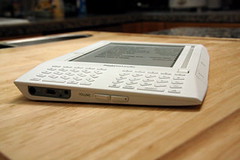
Soon I found I was not alone. At the time, Stephen's article hovered in the top 10 of all purchases on the Kindle, right there with Oprah's favorites. This made me wonder about how the Kindle works - how can Stephen Windwalker be selling as many copies as NYT Bestsellers? What I found was that Stephen's success is a model for everyone who is tired of the traditional publishing world and wants to sell articles and books directly to consumers.
If you're new to Kindle, read my intro here.
Stephen and others like him are at the forefront of a publishing revolution made possible by Amazon's Digital Text Platform (DTP). The DTP is startlingly simple. Anyone can upload a Word file (saved as html) to the DTP, assign a price, and start selling it to Kindle users. Amazon is the only middleman and exerts very little editorial control. Of course, Amazon does make money on every purchase. Right now Amazon keeps about 65 cents of every dollar sold in the Kindle Store.
Two Stories
Stephen Windwalker (a pen name) has been an Amazon seller since the z-shops days. When the Kindle came around, he was fascinated thanks to the problems with what he calls the "Literary-Industrial Complex." Kindle appeared to be a viable alternative to working with publishing houses that dominate the industry.
So, as an experiment, he put some time into understanding Kindle's experimental features and wrote the article I purchased. Stephen made close to a dollar (US) on my purchase. Since his article was published in December of 2007, over 26,000 copies have been sold directly to Kindle users like me.
Stephen's success may be an anomaly, but it is an independent publishing success story nonetheless. Stephen names Amazon Search as one way his article become popular - it's current the #2 result for the search "Kindle." Further, having a web presence outside the Kindle Store helps.
Stephen has since written a number of other articles and blogs about the Independent Publishing and Kindle at Indiekindle.blogspot.com and kindlehomepage.blogspot.com. He's also published a book (in paperback & Kindle edition, of course) to lend a helping hand to other would-be Kindle authors.
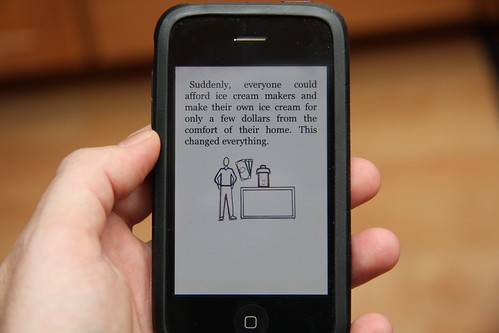
Stephen introduced me to another person who is seeing similar success. His name is Manual "Manny" Burgos. Manny found that simple gray-tone graphics that work on the Kindle are difficult to produce. So, he's created a set of guides that help people design graphics that are optimized for the Kindle's screen. The first of what is now a 4-part series was "Graphics on the Kindle" which lays out how to format images for the best results.
Manny soon discovered demand for this kind of information from Kindle owners and those interesting is helping Kindle publishers with graphics. His second article, "Formatting Comics for the Kindle" reflects the opportunities he sees. Manny hasn't seen Stephen's level of success, but has been able to earn extra money by publishing on the DTP. Manny's work can be found at www.rarearts.com.
We're going to be seeing a lot more stories like these. Stephen and Manny are like you and me. We don't have connections to publishers. We don't have gatekeepers. We don't have the weight of the entire publishing industry on our shoulders. We are prepared to put our work into the consumer market and see what happens. We're prepared to fail and to try again because the cost of production is so low. The question is, what can we create that people would pay to download to the Kindle?
Updated: You can listen to an interview with Stephen Windwalker on Len Edgerly's Kindle Chronicles.