Login

all posts tagged “education”

New Video: Plagiarism Explained by Common Craft

Posted by: leelefever on October 25, 2011- 10:26am

Categories: Common Craft Video, education, Explanation, ourwork, plagiarism, video

Today we’re publishing a new video: Plagiarism Explained by Common Craft

 
One of our most suggested titles, this video is aimed at educators who are on the front lines of helping students of all ages understand and avoid plagiarism. 
 
In researching this video it became clear that there are two types of plagiarism - intentional and unintentional.  While we cover intentional plagiarism, we also highlight the situation where a person has positive intentions, but lacks information about what constitutes plagiarism and how to avoid it.  
 
This video is currently available to Common Craft members with captions in English.
 

What is Common Craft For?

Posted by: leelefever on June 23, 2011- 9:58am

Categories: business, education, our work, strategy


Common Craft for TeachersIt’s taken years and lots of discussions with our fans to understand the answer to the simple question: what is Common Craft for?  We’re just a small company, we don’t have a research department or salespeople pounding the pavement.  We have to learn from what people say online, in email, discussion and phone calls. The summary of this input has helped us define the future of Common Craft and the new direction we’re taking this summer.

For example, just yesterday we received messages that help us see how the videos are being used:

Twitter user Susannah Hall (@hellolibrary) wrote on Twitter:  

@leelefever just want to say THANK YOU for all your work on CommonCraft videos. I have learned a ton & will use in my new high school library.

Lisa Shofnos, President, Computer Training Associates, wrote in email: 

CommonCraft's clever explanations - and cute graphics - make it easier for me to provide effective computer training for older adults who are using computers for the first time. Thank you for this fantastic tool! 

We see these messages almost every day and from them, one big idea has emerged:  Common Craft is for people who educate others. Whether they’re librarians, corporate trainers, teachers, bloggers or consultants, our videos helps these professionals do their job more efficiently and effectively.

It’s this insight that has prompted us to rethink what tools and services we provide to people who use Common Craft videos.  The new Common Craft, out this summer, will be focused directly on serving the needs of teachers, trainers, bloggers and businesses who need better ways to educate others online and off - it’s what Common Craft is for. 

If you would like to be notified when the new Common Craft launches, sign up here

Now, maybe we need to a video to teach ourselves why it’s wrong to end a sentence with a preposition.  


A Classic Economics Debate - As a Rap Music Video

Posted by: leelefever on April 29, 2011- 10:19am

Categories: economics, education, Explanation, money, video

John Papola and Russ Roberts at http://EconStories.tv have made a second video that uses rap and a very well-produced music video to contrast the economic thoeries that are a big part of the political debate about what to do with a failing economy.  I'm really impressed with the format and content - and the song is actually kind of catchy too. 

Fight of the Century: Keynes Vs. Hayek - Round Two:

Speaking at the Texas Library Association Conference

Posted by: leelefever on March 6, 2011- 4:00pm

Categories: education, library, presentation, Speaking, travel

It's true. Sachi and I are attending the Texas Library Association Conference in Austin, April 12-15th.  I will be presenting on Thursday the 14th at 2pm and my talk is called "The Art of Explanation - in Plain English". I hope you'll come.

TLA Conference

This will be our first library conference and we're really excited to meet people like you and take it all in.  Librarians are among our most dedicated fans and this conference is one of the biggest events in the library world.  If you're going to the conference, leave a comment or contact us - it would be great to meet face-to-face. 

Citrix GoToTraining - Custom Video

Posted by: leelefever on January 4, 2011- 4:00pm

Categories: Custom Video, Custom Video, education, our work, training

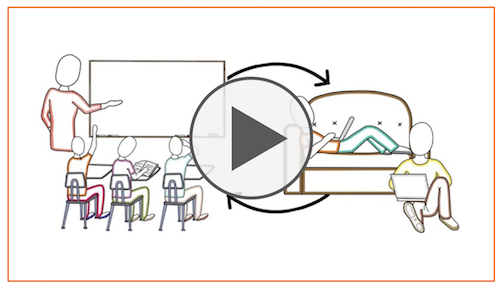
The world of education and training has seen its share of innovation recently.  After hundreds of years of in-person stand-up training, educators have new options. Products like GoToTraining now allow teachers to host classes online. While a number of teachers have made the jump to online training, there are many who have valid concerns about the impact on the training experience.  

This custom video is designed to introduce GoToTraining and outline some of the features that make online training a useful option - even for the skeptical educators out there. 

Big thanks to Kristen and Bob at Citrix for their hard work on this project!

When people ask about the inspiration for our style of videos, I often say that our videos reflect the way that I wish I had learned in school. My learning style wasn't a good match for the way I was taught. 

Recently we completed a custom video project with the Buck Institute for Education (BIE) that focuses on a Project Based Learning or "PBL", and boy did it open my eyes. I can now see that I needed teachers who put PBL to work. I needed to get up from my desk and engage. I needed to work on a real-world issue and use creativity and problem solving - what are known as 21st century skills these days. 

The video below is an introduction to PBL and how it impacted a science teacher's students and helped their community.

It was a pleasure working with Alfred and the team at BIE and I hope this video will help them get more people interested in PBL. You can learn more at BIE.org.

Richard Byrne Explains Why He'd Pay for a Free Video

Posted by: leelefever on July 28, 2010- 5:00pm

Categories: business, education, Licensing, strategy, teachers

Richard Byrne over at Free Tech for Teachers has been one of our biggest supporters in the edu-blogging world and was kind enough to highlight a few of our videos in a recent post called "Three Common Craft Videos That Should Be In Your Training Library."  In this post, Richard states:

I like Common Craft videos for the clear simplicity of their presentations. For that reason I actually purchase copies of the videos to save on my hard drive. I encourage you to do the same if you use their videos for trainings.

Apparently, this post caused some of his readers to ask an important question: Why would I buy something I can use for free? It's a question we hear from time-to-time and I think that Richard's response was one that we really appreciate.  In a follow-up post called Why Pay For a Free Video? He re-posts his answer from a previous post:

A couple of days ago I Tweeted that I was buying a copy of Common Craft's video Wikis in Plain English. The fact that I bought anything may come as a shock to some readers. After all, this is Free Technology for Teachers and you can watch all of the Common Craft videos for free at various places on the Internet. So why did I purchase Wikis in Plain English? I purchased a copy of it because I will be conducting some workshops over the next few months in which Wikis in Plain English will be useful. Since I will be getting paid for those workshops, using the free version of the Common Craft videos would not be right. Put another way, Lee and Sachi put a lot of their time and effort into the production of their videos, for me to profit from their work without paying for that work would be like stealing. Therefore, I bought a copy of Wikis in Plain English and will purchase other videos from Common Craft as needed. Unfortunately, there are a lot of people that haven't come to the same conclusion that I have and have abused the work of Lee and Sachi Lefever. Because of those abuses, the newest Common Craft video is not embeddable although you can still view it for free on Common Craft.

At the end of the day, we've made the choice to share less than half of our library on You Tube. In making that choice, we've left the decision up to the individual educator about how to proceed. Are happy for educators to use the YouTube versions, but we also want people to know that the videos we license do offer benefits that you won't find with YouTube.  Just to name a couple, they are high resolution and look great on projector screens. Further, they don't have any ads or watermarks.  They are designed for workshops and presentations and we work with schools on licensing all the time. Here's a case study.  

We always appreciate educators who do choose to license videos from us, for whatever reason.  It helps us keep making videos. We also understand that educators cannot always afford licensing and hope that the YouTube versions can be an option. In which case, we only ask that you help spread the word about our work and value it provides. 

Meet Us at NECC (National Educational Computing Conference)

Posted by: leelefever on June 1, 2009- 5:00pm

Categories: conference, education, event, travel

Sachi and I will be attending the National Educational Computing Conference (NECC) later this month in Washington DC. This will be our first time attending the conference, so you may see us wandering around with lost looks on our faces.

Because it's such a huge conference, we're hosting a Tweetup [?] so that we can be sure to meet you. Come say hello!


Date: Monday June 29th, 2009

Time: 4:30-6pm

Location: Old Dominion Brew House - Convention Center (we've reserved a room in the back) Map

You can RSVP using Upcoming.org

We're @commoncraft, @leelefever, @sachilefever on Twitter.


A Model for Applying Common Craft Videos

Posted by: leelefever on February 8, 2009- 4:00pm

Categories: AtoZ, business, education, ourwork, thissite, videos

People often ask how our presentation quality videos are used in professional and educational settings. From talking to educators and influencers, we've learned that our videos are often used to introduce a subject - to get everyone on the same page at the beginning of a class, workshop, etc. Recently, as part of our planning for 2009, we came up with a model that helps tell this story.  We call it the A-to-Z Scale.

NEW AtoZ by you.

The scale represents the path to learning a subject. On the left side are the basic, fundamental ideas.  On the right, the details and applications of the ideas.

For example, let's consider the subject of biology.  We might find topics like these at corresponding parts of the scale:

CC atozbiology by you.

As you can see, the scale goes from big, fundamental ideas to specific details.  

When we think about our videos and how they can be applied, we think about the scale and what parts of it represent the biggest opportunities for us to have a positive impact.

The Problem We See:

We believe that one of the real problems in explaining subjects is that people assume too much about what people already know. Their explanation doesn't account for people who are new to the ideas and have major knowledge gaps.  They start in the middle of the scale:

NEW AtoZ by you.

When this happens, people feel lost.  They don't have context for what is being taught or how the idea fits into the big picture.  They're forced to build on an insufficient foundation.

Of course, this isn't surprising.  If the explainer had to account for every knowledge gap, it would be difficult to move people down the scale. It takes valuable time to get everyone on the same page.

The Opportunity:

We believe that the left side of the scale has been neglected for too long.  Educators and influencers don't have time to cover all the basics and they often lack quality resources.  We've heard this many times "I used to spend hours trying to make sure everyone gets the big ideas, but now I just show them your video and everyone gets up to speed together."

This highlights how we see our videos fitting into the world.  Our goal is to focus on the left side of the scale and ensure that viewers come away with the fundamental ideas that create a solid foundation for a subject.  Educators and influencers can use the videos to introduce a subject and then spend their valuable time moving people down the scale. 

NEW AtoZ by you.

A Caveat:

It may seem that we're orienting our videos around only fundamental ideas. This is not the case. The scale can be applied to almost any subject. For example, in terms of biology as a whole, the left side of the scale surely focuses on broad fundamentals.  However, if we apply the scale to DNA gene mapping, our focus on the left side still applies.  We would focus on the big ideas behind DNA gene mapping and leave the details to educators. 

Use Case:

For example, let's consider a class on the subject of personal finance.  It may be easy for the instructor to assume that everyone understands the basics of compound interest or annual percentage rates.  Because it would take too long to get everyone up to speed, she chooses to spend time explaining more detailed ideas like buying a home and Insurance.  She starts at about "K" on the scale.

NEW AtoZ by you.

People learn, but some in the class can't see the big picture because they have knowledge gaps regarding some of the basic ideas that create a foundation for understanding things like buying a home and insurance. They need a way to start learning at "A" instead of "K."

In the case above, Our Financial Basics Series, which is aimed at the left side of the scale, gives the instructor a fun and easy way to get the class on the same page and ensure that everyone can see the big picture. It helps her move quickly from A to K, so that her valuable time is spent on the details.

NEW AtoZ by you.

To Conclude:

In 2009 and beyond, our videos will be aimed at the left side of the scale. We want our videos to save educators and influencers valuable time by creating videos that fill basic knowledge gaps and get learners on the same page so that they can spend time where their time is most effective - on the right side of the scale.

How Education Became Our Focus

Posted by: leelefever on January 25, 2009- 4:00pm

Categories: business, education, future, ourwork

I'm a big believer that every business needs to understand exactly what business they are in - and for us, this has been a journey.  I'm confident, through months of discussion and testing, that we've defined this direction for Common Craft.  Here is what we learned:

I started Common Craft in 2003 to do consulting.  It was just me and I provided consulting services.  Once we started making videos, we were hired to make custom videos.  Again, we were a services business.  In the summer of 2007, we realized that our videos could be products - products that could create a business that scales more easily through licensing. Ultimately, we felt confident in our ability to pick a subject and explain it simply and effectively.  The question became - what do we do with this kind of product?

There was a specific point in our business when we decided exactly what to do.  It was just a few months ago, during the financial meltdown.  We were getting lots of suggestions to explain the mortgage crisis.  We did a lot of research and had every intention of publishing an explanation of it all in 3-4 minutes.  But it didn't feel right.  Something made us feel out of our element.

Despite spending a lot of time on it, we chose to throw out our mortgage crisis work and refocus.  Why?  Because it didn't match with the business we wanted to be in. The more we looked at a mortgage crisis video, the more it seemed like news.  We could see that explaining news events was fertile ground, but not necessarily the best thing for Common Craft.  Here's why:

  • Shelf Life: While news has enduring value, that value often peaks the day it's released. Videos can easily become yesterday's news.
  • Production Time:  Our videos take a long time to produce and it would always be a fire-drill to try to get on the next big story.
  • Ad Revenue: From a product perspective, news is mostly paid-for by advertising.  This model isn't our focus these days. 
  • Positive Impact:  News surely plays a positive role in our world, but we saw other opportunities to educate people about fundamental topics.

So, we refocused.  We stopped considering news stories or any time-sensitive events.  We looked for ways that we could have a lasting, positive impact.  We looked for problems that were relevant and timely, but had a potential shelf-life of years.  We looked for ways to create a product that made sense for our business.

Through these discussions, we realized that we are an education company.  We make videos that explain the basics.  We give people a foundation for understanding important subjects that impact their lives. We want our products, over the long term, to help people become more informed and knowledgeable so they can become more responsible citizens.  If we can accomplish these goals, our business will be successful for years to come.

Right now we're in the process of publishing a series called "Financial Basics" that is our response to the mortgage crisis.  This series is our way of combating the troubling lack of understanding people have regarding personal finance. This is one of multiple broad topics plan to cover in 2009.

By creating educational explanatory videos, we can build products that scale, support us through licensing and hopefully have an enduring, positive impact. It may take a while to get there, but like we say in Financial Basics, it's all about thinking long-term.

In 2009 you'll see that our business is built around licensing videos to individuals, schools and organizations of all types.

Recent Post Topics

Subscribe with RSS