Login

all posts tagged “strategy”

Louis C.K. and the Direct-to-Fans Model

Posted by: leelefever on December 15, 2011- 11:50am

Categories: business, comedy, Direct-to-Fans, fans, media, strategy


Recently comedian Louis C.K. has made a lot of news by offering his most recent comedy special for $5 via his website. That doesn’t sound amazingly disruptive in itself, but if you dive a little deeper, you’ll see that it's an experiment that shines a light on the future of media.
 
Let’s look at the normal process.  A creative person creates something amazing; it could be a video, a album, artwork, whatever.  They often work, under contract, with media companies to sell it. This gives them access to PR, marketing, distribution and management - all helpful for a new artist.  The revenue from selling the creative work pays for the people doing the PR, marketing, distribution and management.  At the end of the day, the artist often gives up some rights to their work, get a lot of people with needs and (small) fraction of every dollar earned. It’s a heavy, cumbersome model that has been the standard for many years.
 
Louis C.K. has taken a first step in disrupting this model and is in a unique position for doing so.  He is a very talented individual with a lot of fans.  He’s known for his standup comedy, but he also has a successful TV show called Louie. But he’s more than the star of the show. He writes, directs, edits, produces and stars in the show.  More than any show on TV, “Louie” is a product of one person. 
 
With his new standup special, he’s using these production talents.  He paid for the production from his own pocket at a cost of over $170,000.  He edited the special himself. He owns the entire process and now he’s selling his production on his website for $5 dollars.  He’s making a bet, with his own cash, that he can do it better than media companies.
 
Here’s a quote from a recent post from him:
The show went on sale at noon on Saturday, December 10th. 12 hours later, we had over 50,000 purchases and had earned $250,000, breaking even on the cost of production and website. As of Today [the 13th], we've sold over 110,000 copies for a total of over $500,000. Minus some money for PayPal charges etc, I have a profit around $200,000 (after taxes $75.58). This is less than I would have been paid by a large company to simply perform the show and let them sell it to you, but they would have charged you about $20 for the video. They would have given you an encrypted and regionally restricted video of limited value, and they would have owned your private information for their own use. They would have withheld international availability indefinitely. This way, you only paid $5, you can use the video any way you want, and you can watch it in Dublin, whatever the city is in Belgium, or Dubai. I got paid nice, and I still own the video (as do you). 
Why is this disruptive?  Because he completely cut out the typical media companies and their controls. Using his own talents and his website, he can make something awesome, sell it directly to fans and earn a good living. No marketers, no agents, no distribution deals, no censors, No DRM, and many fewer hassles.  Just one talented guy and a website.
 
This is just one more example of what’s possible. If it works for him, couldn’t it work for many, many others?  
 
As I said before, he is uniquely positioned to do it. The biggest barrier to making the direct-to-fans model work, for most of us, is brand.  Earning a living from it requires having enough fans who are willing to participate - and that’s the hard part. He's spent years of hard work getting to this point.
 
We’ve seen the potential at Common Craft in licensing our videos directly to educators.  While third party tools help to make it happen, we are a two person company and like Louis C.K., we own the entire process.  Every video we make is written, produced, edited and distributed by the two of us via commoncraft.com.  We’ve made a conscious effort to stay as independent as possible and it has made all the difference. We can use our time to make videos for our members, stay in control and finance our future work. 
 
In that spirit, a final quote from Louis (emphasis mine):
I really hope people keep buying it a lot, so I can have shitloads of money, but at this point I think we can safely say that the experiment really worked. If anybody stole it, it wasn't many of you. Pretty much everybody bought it. And so now we all get to know that about people and stuff.
And that pretty much sums up the why this is news. He now has evidence that people will buy stuff and if that's true for others, it means people are starting to think differently about how they support the work they love - and that's a good thing. 


The New Common Craft is Now Live!

Posted by: leelefever on August 9, 2011- 1:54pm

Categories: business, New Common Craft, ourwork, strategy, website

It's true!  We just launched our new website and business. Here’s a quick review:

Common Craft is now a video subscription service. You or your organization can become a Common Craft member and have your own online library of all current and future Common Craft videos for use in classrooms and on the web.

Membership features include:

  • Instant access - your own growing library of Common Craft videos
  • Sharing tools - easily embed, display or download any video
  • Worry-free membership - no extra fees for features or views
  • Influence - suggest and vote on future video titles
  • First crack - be the first to see and show new video titles
  • Premium content - access members-only resources
  • Mobile - Web-based videos play on mobile devices
  • Languages - Most videos are available with voice-overs in 8 languages
We’re focusing on teachers, trainers, bloggers and businesses who need better ways to educate others.  Our members will be a big part of how we decide what titles to make in the future.
 
We'd love your help in spreading word.
We’ve set up a Sharing Center that provides:
  • Info, facts and figures
  • Embedding options for “The Common Craft Way” video
  • Images for blog posts
  • Our press release
  • Key pages on the new site
We're @commoncraft on Twitter and using the #NewCC hashtag.
 
Thanks so much for your interest in Common Craft.  Please let us know if you have any thoughts or feedback.  Cheers!

What is Common Craft For?

Posted by: leelefever on June 23, 2011- 9:58am

Categories: business, education, our work, strategy


Common Craft for TeachersIt’s taken years and lots of discussions with our fans to understand the answer to the simple question: what is Common Craft for?  We’re just a small company, we don’t have a research department or salespeople pounding the pavement.  We have to learn from what people say online, in email, discussion and phone calls. The summary of this input has helped us define the future of Common Craft and the new direction we’re taking this summer.

For example, just yesterday we received messages that help us see how the videos are being used:

Twitter user Susannah Hall (@hellolibrary) wrote on Twitter:  

@leelefever just want to say THANK YOU for all your work on CommonCraft videos. I have learned a ton & will use in my new high school library.

Lisa Shofnos, President, Computer Training Associates, wrote in email: 

CommonCraft's clever explanations - and cute graphics - make it easier for me to provide effective computer training for older adults who are using computers for the first time. Thank you for this fantastic tool! 

We see these messages almost every day and from them, one big idea has emerged:  Common Craft is for people who educate others. Whether they’re librarians, corporate trainers, teachers, bloggers or consultants, our videos helps these professionals do their job more efficiently and effectively.

It’s this insight that has prompted us to rethink what tools and services we provide to people who use Common Craft videos.  The new Common Craft, out this summer, will be focused directly on serving the needs of teachers, trainers, bloggers and businesses who need better ways to educate others online and off - it’s what Common Craft is for. 

If you would like to be notified when the new Common Craft launches, sign up here

Now, maybe we need to a video to teach ourselves why it’s wrong to end a sentence with a preposition.  


Licensing Your Trademark - A Positive Alternative

Posted by: leelefever on August 24, 2010- 5:00pm

Categories: legal, Licensing, ourwork, strategy, trademark

For a couple of years now, through our work with videos, I’ve realized that licensing is an often neglected business model.  Not only is a potential revenue source, it’s a way to work with people in a positive and permission-based manner.

Patrick O’Keefe, author of Managing Online Forums, recently wrote a post that got me thinking.  It’s called “Rethinking the Cease and Desist - Don’t Threaten Fan Communities and Groups - License Your Brand to Them.”  Patrick is a professional community manager and has a lot of real-world experience in dealing with fan communities - and I think he’s 100% right.

I believe I have the solution. You have to control your trademark. You also don’t want to abuse your vibrant fan base. You feel you are between a rock and a hard place. The solution? License your brand to the site and/or it’s proprietors.
Provide them with a license allowing them to do what they are already doing.

Let’s take a step back and talk about the issue at-hand.  If you own a trademark, like “Common Craft” you must protect it.  If you don’t, you could lose the ability to protect it in the future.  For this reason, you have to be proactive. Unfortunately, enforcing a trademark can be messy.

If you’re a major brand, you have lawyers who are constantly scouring the web for people who use the trademark in illegal ways.  For instance, if I used the Coca-Cola logo to advertise my new drink, they would surely send me a nice letter.

For small companies, it’s sometimes not so simple.  While enforcing your trademark is your duty, you have the real potential of ruining the goodwill you’ve built among your customers and fans by handling the situation in a clumsy way.  

There are the obvious cases where an organization is clearly trying to create confusion by using your trademark to promote their own products.  This is an easy one - a cease-and-desist is often the only thing that will cause them to stop.

Most often though, the person or company violating the trademark (for example, using your logo without permission) does not have bad intentions. They are a fan who wants to use the trademark to help you - not take business from you.  This is a simple case of awareness.  They either didn’t know it was trademarked, or didn’t understand the basics of trademark law.  It’s these cases that are the hardest because a cease-and-desist will seem misplaced.

This is where licensing comes in.  As I’ve written before, licensing is the business of permission. You have the right to control your intellectual property, whether it’s your words, music, videos, logos, etc. and licensing is how that control is often managed. Trademark is a tool that makes licensing possible - they give you legal authority to control what you own.  

So, to Patrick’s point, what seems like a trademark violation may be a business opportunity, or a way to have a formal, productive relationship with fans.  

Let’s say one of your fans wants to start a blog about your brand.  Without asking, they grab a logo from the web and start a blog, maybe with the name of your company in the URL.  You notice it and realize that they are violating your trademark. The problem is confusion: people may confused their site with your site. Avoiding this confusion is part of why trademarks are important. Consumers need confidence that they are dealing with the genuine article. So, if you feel it's a risk, you have a choice. One is to stop them with a cease-and-desist, which will feel harsh to one of your biggest fans.  Another option is to go them and say something like:  

“Hey, I saw your blog and I’d love to see it continue.  As you may know, I own the trademark for the logo and title your using.  I’d like to work with you to keep using them, but I need to make sure that it’s clear who owns it.  For this reason, I’d like to license it to you.  This way, you have my explicit permission to use it and we can work together on how it’s used in the future.  I’ve attached a simple document that outlines how the relationship works.”

This is a more productive way to manage this situation.  There are a number of benefits:
    1.    You protect your trademark
    2.    You create a formal relationship with a big fan
    3.    You have the opportunity to make this a business

Every situation is different, but think about #3 above. Permission doesn’t have to come with a fee, but often it does.  You could easily say that using the logo (for example) costs X amount per year.  Before you know it, you’re making passive income based on your intellectual property -  and that’s a good business to be in.

Final Note:

Of course, we are not lawyers. If you have questions about trademark law, please talk to an attorney.  Here are a couple of links about trademark and trademark infringement:

http://en.wikipedia.org/wiki/Trademark_infringement

http://www.copylaw.com/new_articles/trademrk.html

Richard Byrne Explains Why He'd Pay for a Free Video

Posted by: leelefever on July 28, 2010- 5:00pm

Categories: business, education, Licensing, strategy, teachers

Richard Byrne over at Free Tech for Teachers has been one of our biggest supporters in the edu-blogging world and was kind enough to highlight a few of our videos in a recent post called "Three Common Craft Videos That Should Be In Your Training Library."  In this post, Richard states:

I like Common Craft videos for the clear simplicity of their presentations. For that reason I actually purchase copies of the videos to save on my hard drive. I encourage you to do the same if you use their videos for trainings.

Apparently, this post caused some of his readers to ask an important question: Why would I buy something I can use for free? It's a question we hear from time-to-time and I think that Richard's response was one that we really appreciate.  In a follow-up post called Why Pay For a Free Video? He re-posts his answer from a previous post:

A couple of days ago I Tweeted that I was buying a copy of Common Craft's video Wikis in Plain English. The fact that I bought anything may come as a shock to some readers. After all, this is Free Technology for Teachers and you can watch all of the Common Craft videos for free at various places on the Internet. So why did I purchase Wikis in Plain English? I purchased a copy of it because I will be conducting some workshops over the next few months in which Wikis in Plain English will be useful. Since I will be getting paid for those workshops, using the free version of the Common Craft videos would not be right. Put another way, Lee and Sachi put a lot of their time and effort into the production of their videos, for me to profit from their work without paying for that work would be like stealing. Therefore, I bought a copy of Wikis in Plain English and will purchase other videos from Common Craft as needed. Unfortunately, there are a lot of people that haven't come to the same conclusion that I have and have abused the work of Lee and Sachi Lefever. Because of those abuses, the newest Common Craft video is not embeddable although you can still view it for free on Common Craft.

At the end of the day, we've made the choice to share less than half of our library on You Tube. In making that choice, we've left the decision up to the individual educator about how to proceed. Are happy for educators to use the YouTube versions, but we also want people to know that the videos we license do offer benefits that you won't find with YouTube.  Just to name a couple, they are high resolution and look great on projector screens. Further, they don't have any ads or watermarks.  They are designed for workshops and presentations and we work with schools on licensing all the time. Here's a case study.  

We always appreciate educators who do choose to license videos from us, for whatever reason.  It helps us keep making videos. We also understand that educators cannot always afford licensing and hope that the YouTube versions can be an option. In which case, we only ask that you help spread the word about our work and value it provides. 

Erring on the Side of Happiness

Posted by: leelefever on February 15, 2010- 4:00pm

Categories: beingsmall, business, couplecompany, strategy

Not everyone knows, but Common Craft is a two-person, home-based business. We're 100% independent, with zero employees or investors. While we work with specialists by contract, everything that Common Craft does comes from us and impacts only us. This has been our goal since 2006 when Sachi and I started working together and today, we're starting to really understand what it means to be a two person "couple company."

It's not all unicorns and rainbows. Along with our important video-making duties, I am one of two people in the customer support department. Sachi is our head bookkeeper. There's no one else to answer the phone, run errands or follow up on a question. We spend valuable time on things that could easily be done by others, which surely impacts our productivity. But, we are connected directly to our customers.

Work is a constant part of our lives. Business happens over dinner, on walks and off-hours. We don't ever really get away. Instead, we've learned ways to streamline our work, even when we're supposed to be traveling or on vacation. 

Perhaps most importantly, our business is difficult to scale with two people. When headcount is a constraint, fewer business models make sense. So we have to find what works for us. 

These are obviously self-imposed limits and I'm sure most business people would say that we're missing opportunities. It's true, being small means passing on many opportunities and focusing on ones that fit for us. But it also means new perspectives, perspectives that don't make as much sense outside of a couple company.  

Think for a minute about how decisions are made in many businesses. Money is obviously the driving force, which is directly connected to investor and shareholder interests. Business leaders make hard decisions every day, ones focused on increasing the health of the business. Of course, this is responsible and rational behavior.

But what if there is another perspective, one that is unique to companies like Common Craft? What if, along with money and business health, a driving force of every decision is happiness among the founders? This is how we've learned to operate - our happiness as a home-based unit is perhaps the most important thing for our business and something directly connected to long-term financial success. When we look at opportunities, we ask ourselves - will this make us happy? If this opportunity comes to fruition, will we still be able to live the life we want to live? 

Of course, it's not just happiness. This is really a strategy to prevent its evil twin, unhappiness, from rearing its head. Unhappiness, in the context of a married couple's work together, is poison. Business success wouldn't matter if we stopped enjoying our life together.

So we've been very deliberate about how we run Common Craft. We don't have employees because we don't want an HR department. Instead, we've found a business model (video licensing) that scales without employees.  We don't have an office because we love being at home and have made it our best possible workspace. We can be very low-overhead, agile and lightweight with two people. We've never required outside investment, and I think we're better for it. Investors aren't likely to enjoy a return based on our happiness. We are happily independent. 

In the end, we're designing a business that fits with our goals as a married couple. By erring on the side of happiness, we can grow in ways that create a successful business, but also ensure that we don't lose control of our day-to-day lives. And with these things in place, we hopefully have a solid formula for sustainable creativity.

Of course, things change and Common Craft may become something different down the road.  But what will always be in the front of our minds is the idea that we have a choice. Every business is different and just because your "supposed-to" do something doesn't mean you have to do it. We all have a choice, and for us the important question is - will this make us happy?

For more posts like this, see our Being Small category.

Video Licensing: The Business of Permission

Posted by: leelefever on October 27, 2009- 5:00pm

Categories: business, licensing, strategy, video

Almost anyone can make a video and put it online, but there are relatively few good models for earning a living from online videos. We've been experimenting over a couple of years and believe more than ever that video licensing is a model that has huge potential.

The Current Options

Of course there's the advertising model.  A video is made, it attracts eyeballs, eyeballs are distracted by ads. A tiny percentage of people click the ads and the video host and video owner make a bit of money.  It can certainly work and we've experimented with it, but it can be a long, hard slog.

For video producers, it's certainly possible to make a living by creating custom videos. This market is alive, well and growing. More and more businesses are looking for ways to introduce their product or service with a short online video. Some companies are doing very well with it, but it isn't easily scalable for a small company like ours.

Licensing at Common Craft

At Common Craft, we've been working on a model that's used across the media industry, but hasn't caught on in the online video world - yet. I'm talking about licensing, the business of permission.

Here's an example. Think about a video game that needs awesome songs for an upcoming release. There are bands (or labels) that own awesome songs. The video game company is happy to pay to use the songs in the game. This is a licensing relationship. The owners of the songs give the game company permission to use the songs in exchange for licensing fees. It's a tried and true business relationship.

The same is true for stock photos. You can view them for free (with a watermark), but to use them professionally or commercially, you usually have to pay a licensing fee.

Now, let's apply this model to Common Craft. Like songs on the radio, our videos are available on our website. You can watch them for free and they help us build awareness and brand recognition. We don't earn money from permission to watch the video. Instead, we've tailored our licenses for organizations and individuals who want to use our videos to accomplish their professional goals, like adding a catchy song in a video game.  These organizations are happy to purchase licensed versions because they're high quality and come with explicit permission for use.

Some examples:

1.  A large company needs videos for teaching social media across the organization. Our "Site License" fits the bill.
2.  An individual needs videos for workshops and presentations. We have an "Individual License" for them.
3.  A company needs useful and compelling content to educate visitors to their website.  We have a Commercial "Web License" for these sites.

But it's not always that simple. Thanks to YouTube, which has been helpful in spreading the word about our videos, the assumption for most is that online videos are always free. In offering licenses for our videos, our challenge is education - helping people understand the difference between watching a free video and licensing a higher-quality version for professional use.

It will take time, but the last couple of years have shown us that it's possible to make a living by licensing videos.

Creative Commons

This post would be incomplete without a mention of Creative Commons licenses.  Like any license, Creative Commons is about permission, but these licenses are often used to encourage free use. By using a Creative Commons license, the owner is encouraging others to share, remix, reuse the work as long as a few requirements are met. The requirements are up to the owner and focus on attribution, commercial use, alterations, etc.

While we've decided that Creative Commons is not a good fit for our business, it can be a great resource for video producers who are hoping to get their work in front of more people and be discovered.

Get the Ball Rolling

If you're a video producer, it's time to think about the business of permission! Here are a few things to consider:

  • Do you own video content? If so, it can probably be licensed.
  • Have you ever been contacted for permission to use your videos? If so, that's a licensing opportunity.
  • If you haven't been contacted, identify the potential uses for your videos and look for opportunities.
  • Look for ways to create a premium version of your videos for licensing.

From our perspective, the licensing side of online video has huge potential.  It's great to see companies like Vidvend experimenting with a similar model. Services like e-junkie make digital downloads easy to manage. The tools are there - now it'll just take time for more talented producers to experiment and find how licensing can fit into their future.

Clarity on the Common Craft Business Model

Posted by: leelefever on August 5, 2009- 5:00pm

Categories: business, ourwork, strategy

Through going to conferences and talking with people about Common Craft, it's apparent that people have no idea how Common Craft could be a successful business.  From their perspective, they can watch the videos for free, so how does it work?

I want to answer this question because I think it's important context for understanding why we make the decisions we do.

In business terms, we are a "B2B" company, which means business-to-business. We make videos that are focused on helping businesses, schools, and other organizations accomplish their goals. These customers buy the licensed, high quality versions of our videos to educate employees, students, and website visitors. Our revenue comes from organizations and individuals who want the better versions, but also the permission that comes with licensing.

Now let's talk about the alternative: B2C or business-to-consumer.  Being B2C means making products for use by everyday people.  In which case, we might charge for viewing a Common Craft video, perhaps through a membership service or pay-per-view.  Our revenue would come from individuals who pay to watch and learn from our videos. We decided not to be a B2C company.

Here's one way to look at why this makes sense: In the B2C model, it's more difficult to build brand awareness. Only paying customers would see the videos. We decided early-on that we would give our products to consumers via sites like YouTube to help spread the word.  These versions of the videos would educate, but also have ads for Common Craft.  Over millions of views, this helped build brand awareness and lots of links to our website.  A percentage of these viewers might think "Man, I love that video, but I need a version that's more appropriate for the workplace" or "I'd love to show this in my presentation, but I need a downloadable file." These needs illustrate demand on the B2B side that comes as a result of giving our products to consumers.

Our challenge is to find ways to continue to provide free videos to consumers while increasing the awareness and demand for the licensed versions for workplace/professional use. From this perspective, I hope you'll see why we're making videos on things like Insurance. Our focus is not making something cool for You Tube, it's making something valuable for individuals and organizations with specific goals.
 
A note on custom videos: Making custom videos is a part of the Common Craft business model, but is not our focus and more easily understood than licensing. This article on Read Write Web explains our move away from custom work.

Building a New Foundation for Common Craft

Posted by: leelefever on September 22, 2008- 5:00pm

Categories: business, legal, ourwork, strategy, video

For the last few months, we've been "foundation building."  For us, this means taking the time to focus on the business behind Common Craft and how we communicate our business to you. Our goal is clarity - if we are clear about the exact business that we run, then we're more able to illustrate our value to potential customers. It's hard work and something we're excited to see come to fruition. Now that it's in place, we can really focus on videos.

The elements of the foundation:

Licenses - We've had a great experience reviewing our licenses. For the first time, a legal team worked with us over a matter of weeks and learned our business from top to bottom.  They asked questions, they challenged us, they made suggestions.  We came out of it with a new license agreement that:

1.  Matches exactly with the business we want to run
2.  Matches our plain English style (it fits on one page!)
3.  Gives us confidence that our licenses are solid.

These are our snazzy license icons that appear at the end of each video:

individual icon 50 by you.site icon 50 by you.commercial icon 50 by you.

Education - Coming out of the review process gave us new insight into the big ideas we must be able to communicate about our licenses.  We updated our FAQ, created a Licensing Guide and a new video that describes how to share Common Craft videos responsibly.  It's now on the front page and on the Store page - and below:

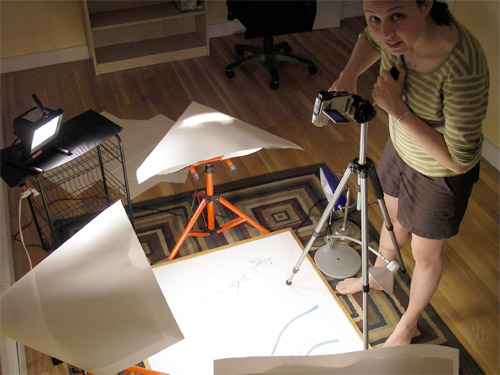
Equipment - We've reinvented our studio to make video production more comfortable and efficient. You won't see big changes in the videos, but you might notice smiles on our faces thanks to having a studio set up that makes production a joy.  The big change?  We moved the whiteboard off the floor and onto a table, mounted the camera from the ceiling,  added a connection to a TV and clamped on smaller lights with less heat.  This is hopefully our foundation for years of videos to come.

Our Studio by you.


New Commercial License - As a result of our review, we're now offering a new Commercial License.  This license is for companies that would like to display Common Craft videos on their public-facing web site.  We ask these customers to fill out a form to apply for a Commercial License.

New School Program - We want students to benefit from our videos.  We're now offering a special deal for schools of all types.  Entire school districts (K-12), independent, and post-secondary schools only need to purchase a single Site License to use licensed versions of our videos.  Further, the Site License is offered to schools at a 50% discount. Apply for the discount here.

New Format: Kindle Books - We've started to adapt our videos into Kindle books that are availabe for purchase from Amazon's Kindle Store.  More on this later. 

Kindle Books

So, we've been busy behind the scenes, but now we can focus once again on videos for you.  We've been receiving some great suggestions for future videos. If you have one to add or have any questions, please don't hesitate to contact us.

On To Bluer Oceans

Posted by: leelefever on September 9, 2007- 5:00pm

Categories: business, marketing, strategy, thissite, video

The transition is complete. Common Craft has become a different company and our first products are coming out in the next two weeks.

A Bit of Background:

In 2003, I started Common Craft to focus on online communities. After being a professional online community manager for a few years (1999-2003) Common Craft gave me a chance to be a consultant for the first time. I loved it - I had a cozy little niche that enabled me to work on fun and interesting projects, like the March of Dimes - Share Your Story community. Even then, part of my services included plain English explanations.

Then Common Craft was essentially out of the market for the entire year of 2006. When we came back, my little niche had changed. It seemed like everywhere I turned there was someone claiming "community" as part of their area of expertise. These weren't just claims - a lot of people with real experience entered the market. From my perspective, Common Craft's blue ocean became red in 2006.

Of course, it was during this time that we began experimenting with online video. Not since discovering online communities had anything excited me so. Our time off in 2006 gave us valuable experience - experience that we used to create the Common Craft Show and the Paperworks format. Much to our surprise, it was the Common Craft Show that created a new business for us.

After we made our second video for the Show, Wikis in Plain English, companies began to ask about custom videos. Thankfully this was an opportunity we were ready to take and since, we've oriented Common Craft's business around our videos and what we call Common Craft Productions.

We see an emerging market for better explanations and Common Craft's future is focused on serving that market. We are an explanation company and our videos are our most popular product.

So, Common Craft is a different company. We have a product instead of a service. We are two people instead of one, and our future is focused not so much on community, but on better communication.

This is a great fit for us, especially considering the origin of the Common Craft name. I've always said that communication is the most common craft there is. Now we're out to prove that our version of that craft can make complex ideas easier to understand.

Recent Post Topics

Subscribe with RSS