It wasn't too long ago that online communities had a killer app - it was the message board. It was the Honeymooners of early television. When choice was limited, popularity grew around the best options of the time. Indeed, the friendly message board has been a bedrock of online community interaction - one of the original articles. These days however, the message board has competition in the effort for your community's attention.
The central problem is the discussion format. Discussion is not a comfortable situation for a lot of people, online and off. No one wants to be the guy or gal who stepped up and fell on deaf ears. It's scary stuff and only a certain percentage of people are prepared for that sort of communication on a web site. Of course there some that like it way too much, but that's another post.
My point is that the participation options have grown. If you're thinking about an online community, consider all the ways that you can enable members to participate. What about...
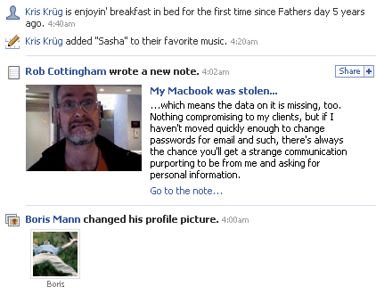
Social networking - What's included on the member profile? Can the profile work more like a member home page ? Can people declare their connections to one another? Can new content be filtered through personal connections?
Groups - Can your members form new groups within the community? Can they invite one other to join a group focused on a specific subject matter? Many social networking sites like FaceBook use this feature.
Blogging - Is there a way for your members to communicate without the expectation of discussion - a soap box? Can a member start their own blog? What about the community manager - does he/she have a blog for relating news and community events? The March of Dimes Share Your Story Community is using blogs and message boards effectively.
Tags - Do you enable members to tag (describe with free form keywords) content within the community? Can members use the tags to group related pieces of content? Flickr photos is a great example of this feature for photos.
Personal Tags - Can members tag themselves with words that relate their interests? Can these tags be used to bring people together with common interests? Can personal tags be used to match people with content?
External Tags - Does your community have a tag they use to remember external web sites? An example is the "nptech" tag that Non-Profit technology people use to organize content from around the web.
Social Bookmarking - Are your members using a social bookmarking service like Del.icio.us? What if your site displayed an updated list of all the sites that your members bookmarked from across the web? Does your community manager use bookmarking tools? If so, the community would likely be interested. An example is our Zeitgeist page here.
Face-to-face - Do you help your members meet face-to-face? Meetup is a great example of "using the internet to get people off the internet"
Ratings - Do you enable your members to participate in the form of ratings? Stars? Thumbs up or down? Digg?
Favorites - Can your members mark specific community content as "favorites". Are the favorites displayed in public? Can the members share Favorites?
Surveys or Polls - Do your members have opportunities to participate in short polls that work to summarize the perceptions of the community around pertinent subjects?
Micro-updates - Can your members post little updates about what is on their mind or what they're doing? Maybe like Twitter?
Wiki - Are there any parts of your web site where members can edit the page? What about making a new page? Could content exist in static and editable form? Could your site work like Wikipedia?
Comments/annotations on static content - Do you enable members to provide feedback on a news article or other static content? Can members annotate a page?
Presence - When a member is logged in, is their presence made apparent to other members? Can they use presence to start a 1:1 conversation?
Chat - Do you enable members to chat in a group setting in real time? Maybe at the same time every week? Could IM be integrated?
Video - Can your members upload or embed videos? Can they have a video as a part of their member profile? Would screencasts help your community understand how to use the site?
Photos - Can your members upload photos to the community? Can they collect them on their member profile? What about a Flickr badge?
Cross Community Displays - Can members display widgets or badges from other sites where they participate? My Space pages are often full of these types of displays.
Customization - Can members change the way their profile appears on the site? Colors, fonts, layout.
Geo Mapping - Can members place themselves on a map? Can the community see itself in terms of location on a map? Can members form groups around locations? Google Maps makes this easy and provides for making "map mashups" and Plazes enables members to share locations.
Moderation - Can your members do basic content moderation? Can they report inappropriate content? 43 Things is empowering members to help them fight spam.
Contests/Games - Are there opportunities for members to compete with one another and create amazing content at the same time? JPG Magazine enables amateur photographers to compete to appear in the real world magazine.
Production - Have you asked your members about designing a new logo for the company? What about a t-shirt for an upcoming conference? Threadless is a great model for community production.
Special Guests - Do you know special guests that would agree to visit the community and have chats or discussions with members?
RSS - Can members share or suggest RSS feeds? Can they add headlines from RSS feeds to their member profiles?
RSS Aggregation - Does your site have a place for members to read constantly updated news that is pertinent to the community? This can be done with an on-site RSS reader. If so, can members add new RSS feeds?
Direct Email Contact - Is there an easy and secure way for members to email one-another using the web site? Danger: spam.
Refer-a-friend - Can members send an email to a friend to invite them to participate?
Email Participation - Can members email content directly to the site? Many wiki sites enable this.
Of course, the question remains which of these features will work best for a specific community. While I don't have an answer for that question, I do have the incorrect answer: it is "everything". No community can or should benefit from all the features listed above - attempting to do it all is a recipe for failure. The rule is to start small and focused and build to needs over time.
Again, there is an excellent probability that your community will benefit from a message board. My point is not to 'dis our long-time friend. My point is to illustrate that the participation landscape is changing. Look at your community and assume that the message board is not for everyone and I think you'll see that the possibilities to engage the other people are endless.