I remember the exact moment when it first became apparent to me that there was such a thing as an explanation problem. I was at a small conference on Silicon Valley in early 2004. There was a CEO of a start up there and during his talk, he mentioned RSS. Someone raised their hand and asked the question "What is RSS?"

This CEO's responses to the question, and I'm not kidding, was "RSS is an XML-based content syndication format." As you might expect, this was met with a look of bewilderment.
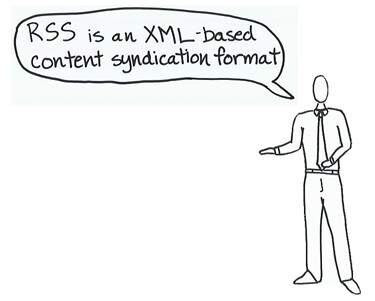
I was in the audience and had an AHA! moment. It was clear to me that RSS had an explanation problem that was preventing it from being adopted. Every time someone went looking for information about RSS and found that it was "an XML-based content syndication format" an opportunity was lost.
Since then I've been thinking a lot about explanation problems I'm starting to define them and the problems they cause. Ultimately, I think it's about adoption - adoption of an idea, a product or service. Good explanations increase adoption and poor explanations limit adoption. Here's how I'd explain it in Plain English.
An explanation problem exists when there is a mismatch between what is heard and what matters to the target audience.
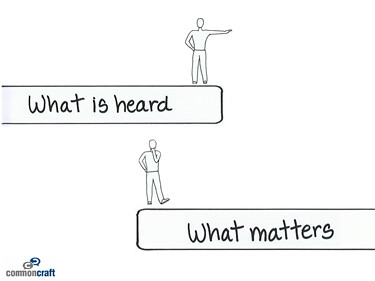
Looking back at the RSS example, the question was asked by someone curious about RSS and the answer, while correct, didn't matter to the asker. The CEOs explanation didn't help them to see why they should care.
An interesting way to look at this situation is by considering how questions are asked. Often, when someone asks "what is...", they really mean "Why does it matter to me?" By considering what matters to someone, the answer becomes different and more likely to give them information they can act on.
One of the things that we've learned is that explanation sometimes means answering a different question than was asked. It's not always "what is it?" as much as "why should I care about it?"
Of course, the example with the CEO is what led me to write this blog entry (a month after the conference) and eventually, this video with Sachi.
NOTE: If you're interested in learning in-depth about the skill of explanation and how to make Common Craft Style videos, check out our online courses at the Explainer Academy.